
 In the wake of negative publicity about individuals and small businesses losing their existing health insurance due to the Affordable Care Act, the Department of Health & Human Services, in consultation with the Treasury Department and the Department of Labor, has provided transitional relief. The transitional relief applies only if certain conditions are met, as follows:
Category Archives: Employee Benefits
If You Like Your Insurance, You Can Keep Your Insurance… At Least For Another Year
California Public Pension Ballot Initiative Would Eliminate Vested Right to Future Benefit Accruals
(Posted on October 16, 2013 by Carol V. Calhoun)
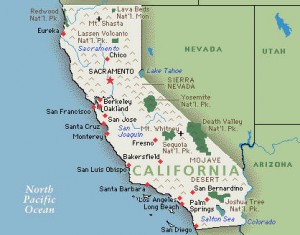 A California statewide ballot initiative proposal, The Pension Reform Act of 2014 was filed on October 15, 2013. The proposal if passed would amend the California constitution to provide that employees have no vested rights in future pension and retiree health benefit accruals, but only to benefits accrued based on past employment. As such, it would cause the vesting of public retirement plans in California to be more comparable to the vesting of private retirement plans under the Employee Retirement Income Security Act of 1974 (“ERISA”). The proposal, if adopted, would be particularly significant inasmuch as California has historically been a leader in the recognition of the right of public employees to vesting in future benefit accruals.
New article: Supreme Court Same-Sex Marriage Decisions Create New Rules for Employee Benefit Plans
(Posted on October 4, 2013 by Carol V. Calhoun)
 Carol V. Calhoun‘s article, “Supreme Court Same-Sex Marriage Decisions Create New Rules for Employee Benefit Plans,” has now been published in Baltimore OUTloud. The article discusses the effect of the Supreme Court’s decisions regarding the Defense of Marriage Act and the subsequent guidance by the Internal Revenue Service and the Department of Labor on employee benefit plans.
Supreme Court Same-Sex Marriage Decisions Create New Rules for Employee Benefit Plans
(Posted on October 4, 2013 by Carol V. Calhoun)
After publication of this article, the Department of Labor revised regulation under the Family & Medical Leave Act to provide protections for legally married same-sex spouses, regardless of their state of domicile. Moreover, the discussion does not take into account the Supreme Court’s later decision in Obergefell v. Hodges, which struck down bans on same-sex marriage. An updated version of the information in this article, taking account of these and other recent developments, can be found at this link.
On June 26, 2013 in United States v. Windsor, the Supreme Court struck down section 3 of the Defense of Marriage Act (“DOMA”), which had barred federal recognition of same-sex marriages. On August 29, the Treasury Department and the Internal Revenue Service (“IRS”) announced that all same-sex marriages legal in the jurisdiction in which performed would be recognized for federal tax purposes, even if not recognized in a couple’s home state. On September 18, the Department of Labor (“DOL”) announced that the same rule would apply for purposes of the Employee Retirement Income Security Act of 1974 (“ERISA”).
What is the effect of the Supreme Court decision and the guidance from Treasury, IRS, and DOL on employee benefit plans? This article deals separately with the effect on plans subject to ERISA (plans other than governmental or church plans), plans maintained by governmental entities for their employees (governmental plans), and church plans.
ERISA Plans
The effect of the Supreme Court’s decisions and the agency guidance will depend on what benefits the employer is currently providing to same-sex spouses or domestic partners, and whether the employer wishes to avoid providing more benefits than are legally required. Each of the possible situations is discussed below.
1. Employer Currently Provides Spousal Benefits (But Not Domestic Partner Benefits), and Is Willing to Extend Benefits to Same-Sex Spouses
Going forward, the simplest choice for an employer is simply to treat same-sex spouses the same way it treats opposite-sex spouses. This has several immediate consequences:
- If the employer maintains a pension plan and an employee in a same-sex marriage retires, the normal form of benefits under the plan should be a qualified joint and survivor annuity for the life of the employee and the spouse. An employee should not be permitted to elect any other form of benefits without the consent of the spouse.
- If the employer maintains a pension plan and an employee in a same-sex marriage dies with a vested benefit under the plan, the spouse should receive a qualified preretirement survivor annuity unless both the employee and the spouse have elected out of such annuity.
- If the employer maintains a retirement plan other than a pension plan (e.g., a 401(k) plan), and an employee in a same-sex marriage dies with a vested benefit under the plan, the spouse should receive the entire death benefit under the plan.
- If a same-sex spouse is entitled to receive death benefits under an employer’s retirement plan and instead elects to have them directly rolled over to another plan, the spouse should be permitted to use any kind of plan to receive the rollover that would be permitted in the case of any other spouse, rather than being limited to the plans that would be available to a nonspousal beneficiary.
- If an employee with a same-sex spouse applies for a plan loan, the spouse must now consent to the loan before it can be provided.
- A retirement plan must comply with any qualified domestic relations order that transfers a portion of the employee’s benefits to a same-sex spouse or former spouse.
- An employee with a same-sex spouse should be allowed to take into account the spouse’s life expectancy in calculating the minimum distribution required under Internal Revenue Code section 401(a)(9). Similarly, minimum distributions for after-death distributions to a same-sex spouse should be calculated the same as for any other spouse.
- If a 401(k) plan provides for hardship distributions, or a 457(b) plan provides for distributions on account of an unforeseeable emergency, the hardship or unforeseeable emergency of a same-sex spouse can now be taken into account to the same extent as would apply in the case of any other spouse.
- If the employer maintains a health plan with spousal coverage, any new employee with a same-sex spouse should be permitted to elect spousal coverage under the plan. A same-sex spouse should be permitted to elect COBRA (health care continuation) coverage under such plan under the same conditions as would apply to an opposite-sex spouse.
- If the employer maintains a cafeteria plan, any new employee with a same-sex spouse should be treated as married for all purposes under the plan.
- An employee should be permitted to take family and medical leave to care for an ill same-sex spouse under the same conditions as for any other ill spouse.
If the employer’s plans include a definition of “spouse” that reflects the prior law excluding same-sex spouses, appropriate plan amendments should be made.
However, complications are introduced by the fact that there was no set beginning date for the application of the changes. The Treasury announcement stated that same-sex couples would be permitted to amend their tax returns for all years open under the statute of limitations. Guidance is expected, but not yet issued, on a variety of questions regarding the extent to which the changes should be applied retroactively in the case of employee benefit issues. The following are some examples of the questions that must be considered:
- If an employee with a same-sex spouse has already retired and begun receiving a form of pension benefits other than the qualified joint and survivor annuity, must the form of benefits be modified now? And if so, should the change be made retroactive to the first date on which benefits were paid, or should it merely apply to future payments? Should employees and their same-sex spouses be permitted to make a new election now to opt out of such form of benefits, if they so desire?
- If an employee with a same-sex spouse has already died after becoming vested in a retirement plan, is the spouse owed a benefit? And if the benefit has already been paid to someone other than the spouse, does the plan have the right to recoup the previously paid benefit?
- If a plan is making the minimum required distributions to an employee or same-sex spouse, can it discontinue all distributions until it has made up the excess amounts distributed in prior years (calculated based on treating the employee as married from the beginning)?
- A cafeteria plan (including a plan for the pretax payment of health insurance premiums) is permitted to allow for enrollment only once per year, unless certain events provided in the statute or regulations occur. An employer can permit enrollment upon marriage. But can it permit enrollment outside of the open enrollment period based on an employee’s same-sex marriage that may have occurred years ago?
2. Employer Currently Provides Domestic Partner Benefits
If an employer currently treats domestic partners as if they were married for benefits purposes to the extent permitted by prior law, the most immediate task is to determine which employees listed as domestic partners are in fact married, and to extend to them the new rights generated by the Supreme Court decision and the Treasury Department and Department of Labor guidance as described in the preceding section. For purposes of federal employee benefits law, an employee in a civil union or comprehensive domestic partnership is not treated as married (unless there is a legal marriage in addition to the civil union or domestic partnership), even if such employee has the same rights under state law as a married person. Thus, for example, a party to a civil union cannot be treated as a spouse for purpose of calculating minimum required distributions, and benefits cannot be paid to such a person pursuant to a domestic relations order unless such person qualifies as a “dependent” for purposes of federal tax law. Even if benefits are paid to a domestic partner under a domestic relations order, the benefits will be taxable to the employee (as contrasted with benefits payable to a spouse under a domestic relations order, which are taxable to the spouse).
In addition, if the same-sex spouse of an employee is covered under the employer’s health insurance or cafeteria plan, the value of the coverage was previously considered taxable to the employee in many instances. The employer should now cease to treat such coverage as taxable in calculating income tax withholding, Social Security and Medicare (“FICA”) taxes, and federal unemployment taxes. The IRS has now provided procedures for claiming a refund of previously paid taxes in such instances. And of course, COBRA rights will now apply to same-sex married couples in the same manner as they would apply to opposite-sex married couples.
3. Employer Wants to Avoid Providing Benefits to Same-Sex Spouses
What of an employer that wants to avoid providing benefits to same-sex spouses? What is the minimum recognition that must legally be given to a same-sex marriage?
The answer will depend on both federal and applicable state law. Federal law requires that a retirement plan recognize a same-sex marriage for each of the retirement plan purposes listed in the first section, other than the provisions for hardship or unforeseeable emergency distributions. It requires that family and medical leave be available to an employee whose domicile is a state that recognizes same-sex marriage. However, it does not require that a health or cafeteria plan provide spousal coverage.
To the extent that a plan is insured, state law may regulate the provisions of the insurance contracts. Thus, in some states, an insurance contract may not be permitted to discriminate between married same-sex couples and other married couples. Indeed, a state law may even require spousal coverage to be extended to individuals who would not be treated as married for purposes of federal law (e.g., those in a civil union or comprehensive domestic partnership). In the case of a self-insured health plan, it is unclear whether a state law that prohibits discrimination on the basis of sexual orientation would require an employer to treat same-sex spouses the same as other spouses. And even if it is legal to exclude same-sex spouses from benefits, such exclusions may be used to show discriminatory intent if an employer is charged with non-benefits-related violations of a state law prohibiting discrimination based on sexual orientation.
An employer that wishes to exclude same-sex spouses from benefits must also look at whether such exclusion, as a factual matter, causes discrimination against protected groups. For example, a qualified retirement plan is not permitted to discriminate in favor of highly compensated employees. And federal law prohibits discrimination based on race, sex, disability, age, and veteran status. If employees with same-sex spouses disproportionately fall into one of the protected classes, an employer may face legal problems in excluding them even if state statutes do not prohibit discrimination based on sexual orientation.
Finally, an employer that wishes to avoid granting more benefits than required by law to employees in same-sex marriages must carefully examine its plan documents. If a document says that benefits are to be provided to a “spouse,” and does not limit the definition of spouse, an employee may have a contractual right to spousal benefits even if the employer was not legally required to provide them.
Governmental Plans
Governmental plans are exempt from many of the qualification rules of the Internal Revenue Code, and from many other federal laws regarding employee benefits. However, unlike plans covered by ERISA (for which ERISA preempts many state laws), governmental plans are regulated by state constitutions and laws. In many states, constitutional or other legal provisions forbid the recognition of same-sex marriages. In others, constitutional or other legal provisions may require the recognition of civil unions or comprehensive domestic partnerships. Moreover, governmental plans themselves are often embodied in statutes, which neither the contributing employer nor the governing board of the plan may be in a position to modify. Thus, the first task is to determine the extent to which relevant constitutional and other law, and the provisions of the plan document, may require or preclude recognition of same-sex relationships.
That being said, a governmental retirement plan that does not otherwise recognize same-sex marriages will still need to allow a same-sex widow(er) of an employee to directly roll over any benefits to which he or she is entitled as a beneficiary to any plan to which any other widow(er) of an employee could roll over benefits, in order to avoid jeopardizing its qualified status. In addition, federal income tax withholding on retirement benefits must be made in accordance with the distributee’s marital status as determined under federal law, which means that same-sex marriages must be taken into account for withholding purposes. And the Family and Medical Leave Act requires that a same-sex spouse must be considered a spouse for purposes of family and medical leave if recognized as such under the laws of the jurisdiction of the employee’s domicile. Thus, for example, a Virginia governmental employer would need to recognize the same-sex marriage of any of its employees who was domiciled in Maryland or the District of Columbia for purposes of family and medical leave, even though Virginia law does not otherwise recognize same-sex marriages.
Conversely, an employer in a state that has only civil unions or domestic partnerships (but not same-sex marriage) will need to determine which of its employees in such relationships have been legally married under the laws of any other state. Even if the same benefits are being granted to employees in civil unions or domestic partnerships as to married employees, married same-sex employees will now have rollover rights under retirement plans, and treatment as married for purposes of calculating federal taxes, which are not available to couples who are not legally married.
Church Plans
Churches are likely to have the most flexibility in dealing with today’s decisions–but they also need to review their plans carefully to ensure that they do not accidentally grant or deny coverage.
The increased flexibility comes because of three factors. First, church plans are exempt from most provisions of ERISA. Second, state laws implementing same-sex marriage and/or prohibiting discrimination based on sexual orientation often provide exemptions for churches. Thus, for example, even a church based in Maryland could refuse to cover its employees’ same-sex spouses under a plan that covered all of its employees’ opposite-sex spouses. And third, unlike governmental plans, church plans are not subject to the equal protection provisions of the federal Constitution.
Nevertheless, a church retirement plan that does not otherwise recognize same-sex marriages will still need to allow a same-sex widow(er) of an employee to directly roll over any benefits to which he or she is entitled as a beneficiary to any plan to which any other widow(er) of an employee could roll over benefits, in order to avoid jeopardizing its qualified status. In addition, federal income tax withholding on retirement benefits must be made in accordance with the distributee’s marital status as determined under federal law, which means that same-sex marriages must be taken into account for withholding purposes.
Conversely, a church that elects to cover same-sex spouses would be in the same situation as a governmental employer that recognizes same-sex marriage. ERISA would not affect the plan, one way or the other, and now at least with respect to couples domiciled in states that recognize same-sex marriage, the employer need no longer be concerned about differing federal tax treatment of same-sex and opposite-sex spouses.
However, it is still critical to review plan language carefully. If, for example, a plan says only that it covers the “spouses” of employees, an employee with a same-sex spouse who was not covered by the plan might be entitled to sue on a contractual claim, even if nondiscrimination rules did not apply. Conversely, staff might be questioned by the congregation about misappropriation of funds if benefits went to individuals defined by applicable state law as not being spouses. Simple amendments to the plan to specify exactly who is covered could help to avoid such issues.
The DOL takes the position that a same-sex spouse must be treated as a spouse for purposes of the Family & Medical Leave Act only if the marriage is recognized in the jurisdiction of the employee’s domicile. However, nothing prevents an employer from recognizing other marriages for purposes of family and medical leave. From the perspective of the employer, recognizing all legal same-sex marriages is administratively simpler than determining the recognition of same-sex marriages under each of the fifty states.
Whether the benefits are taxable for state purposes will depend on the laws of the state in which the employee is domiciled. This issue is complicated by the fact that many of the states that preclude recognition of same-sex marriage also conform to the Internal Revenue Code (which now recognizes such marriages) in applying their own tax laws. See State Taxes and Married Same-Sex Couples.
Effective January 1, 2015, Federal law requires an insurer in the group or individual market to offer coverage of same-sex spouses to the same extent that it offers coverage of opposite-sex spouses. However, this does not require an employer to purchase such coverage.
For more information, see Ann M. Caresani, “The Complex World of ERISA Preemption” [chapter 9] in Paul J. Schneider and Brian M. Pinheiro, ERISA: A Comprehensive Guide (Wolters Kluwer 4th ed. 2012 & 2013 Supp.).
The discussion in this article assumes that a state or local government is permitted to ignore a same-sex marriage, except to the extent federal law applies. In United States v. Windsor, the Supreme Court struck down the provision of the federal Defense of Marriage Act which had barred the federal government from recognizing same-sex marriages. The decision was based on the due process clause of the Fifth Amendment to the Constitution. Although the Fifth Amendment applies only to the United States government, the Fourteenth Amendment contains a due process clause applicable to the states. Thus, it would not be at all surprising if future decisions precluded states from treating same-sex marriages differently from opposite-sex marriages.
See footnote 2, above, regarding state tax withholding.
California Superior Court Finds Vested Right to Retiree Health Benefits
(Posted on September 23, 2013 by Carol V. Calhoun)
Pension plans of businesses and most tax-exempt organizations are subject to federal rules which permit them to discontinue accruals of benefits at any time, so long as previously accrued benefits are preserved. (Internal Revenue Code section 411.) By contrast, pension plans of governmental employers are typically subject to protections under court decisions based on federal or state constitutions provisions forbidding the “impairment of contracts,” which may require the preservation of not only past but future benefit accruals. The leading cases in this area come from California, although courts in other states have often looked to them in interpreting similar constitutional provisions in other states. See, e.g., Betts v. Board of Administration, 21 Cal.3d 859, 864 (1978).
Starting in 2011, California courts have begun applying similar reasoning to the provision of retiree health benefits, as well as pension benefits. In Retired Employees v. Co. of Orange, 52 Cal. 4th 1171, 266 P.3d 287, 134 Cal. Rptr. 3d 779 (2011), the California Supreme Court held that
under California law, a vested right to health benefits for retired county employees can be implied under certain circumstances from a county ordinance or resolution. Whether those circumstances exist in this case is beyond the scope of the question posed to us by the Ninth Circuit.
A recent case from the Los Angeles Superior Court, Los Angeles City Attorneys Association v. City of Los Angeles has provided additional guidance on this issue, although it seems to raise as many questions as it answers.
IRS Creates Simplified Procedures for Refunds of Employment Taxes on Spousal Benefits
(Posted on September 23, 2013 by Carol V. Calhoun)
 The IRS has now issued Notice 2013-61, which provides procedures for requesting refunds on employment taxes paid with respect to spousal benefits for same-sex spouses. Some highlights:
Department of Labor Announces That Same-Sex Marriages Will Be Recognized For ERISA Purposes, Regardless of the Laws of the Employer’s or Employee’s State
(Posted on September 18, 2013 by Carol V. Calhoun)
 The Department of Labor has now issued Technical Release No. 2013-04 (September 18, 2013), in which it announces that for purposes of Title 1 of the Employee Retirement Income Security Act of 1974 (“ERISA”), the term “spouse” will be read to refer to any individuals who are lawfully married under any state law, including individuals married to a person of the same sex who were legally married in a state that recognizes such marriages, but who are domiciled in a state that does not recognize such marriages. Similarly, the term “marriage” will be read to include a same-sex marriage that is legally recognized as a marriage under any state law. (The latter provision is apparently necessary to deal with marriages that are performed abroad.) Civil unions and domestic partnerships will not, however, be treated as marriages. This corresponds with the position earlier taken by the IRS.
The announcement applies only for purposes of ERISA, however. Face Sheet 28F indicates that the Department of Labor will treat a party to same-sex marriage as a spouse for purposes of the Family & Medical Leave Act only if the state where the employee resides recognizes the marriage.
Deadline to Submit Opinion and Advisory Letter Applications for Defined Benefit Mass Submitter Plans Extended
(Posted on August 19, 2013 by Carol V. Calhoun)
Today’s Internal Revenue Bulletin includes Announcement 2013-37, which extends the date for filing defined benefit mass submitter lead plans to the IRS from October 31, 2013 to January 31, 2014. This deadline parallels the deadline for other master and prototype defined benefit plans, and is the same as the deadline for individually designed plans that are on Cycle C (including all governmental plans) and volume submitter defined benefit plans.
Who is a spouse? Different federal agencies take differing approaches after Windsor
(Posted on August 13, 2013 by Carol V. Calhoun)
 Since the publication of this article, Treasury and the IRS have announced that any legal same-sex marriage will be recognized for federal tax purposes, regardless of whether the couple’s home state recognizes the marriage. See this post. The Department of Labor has also issued final regulations under the Family & Medical Leave Act which recognize a marriage, regardless of the couple’s domicile, if a) it occurred within the United States, and it was valid in the state in which it took place, and b) it occurred outside of the United States, if it was valid in the jurisdiction in which it took place and it could have been entered into in at least one state.
Federal law requires that employer plans determine marital status in a variety of contexts, ranging from requirements that ERISA-covered retirement plans provide spousal death benefits (e.g., a qualified joint and survivor annuity, qualified preretirement survivor annuity, or payment of the participant’s account balance to the spouse) to COBRA (health care continuation) rights in the event of a divorce or separation. In the wake of the Supreme Court’s decision in United States v. Windsor, it is clear that a same-sex married couple must be treated the same as an opposite-sex married couple for these purposes. But when will a same-sex couple be treated as married? Weeks after the Windsor decision, the few federal agencies that have issued guidance have taken wildly disparate approaches.
Carol V. Calhoun Quoted in Tax Notes Article, “Unreleased Technical Advice Memoranda Illuminate IRS Position on Pension Deferral Plans”
(Posted on August 8, 2013 by Carol V. Calhoun)
The article (the full text of which is available only to Tax Notes subscribers) deals with the fact that the IRS failed to release two 2007 Technical Advice Memoranda (TAMs), which indicated that the annual contributions to a defined benefit plan under a deferred retirement option plan (“DROP“) will be treated as a contribution to a separate defined contribution plan (and thus subject to an annual additions limitation) if the contribution is credited with actual plan earnings. While this position was one we had taken in an article back in 1998, it apparently came as news to many local governments. The article also raises questions about the IRS authority to withhold release of TAMs.